


Everybody has a Superhero
During Brain Tumor Awareness Month, Telix is sharing the stories of patients and caregivers living with brain cancer, highlighting the urgent need for better tools to diagnose, monitor and treat this devastating disease.
Craig Stankiewicz is a husband, father and business professional from Chicago, Illinois. In August 2021, Craig was diagnosed with glioblastoma (GBM) and almost five years on he continues to face the disease, using his experience to help others with the same diagnosis.
By his wife Emily’s description, Craig had always been the healthiest person she knew. He was up early, in the gym regularly, and not someone who had ever given his health much reason for concern.
When the headaches started, they were easy to dismiss but one afternoon, Craig looked down at a cup in his hand and realized that, although he was certain he was holding it straight, it was tilted at an angle.
An MRI was ordered, more to rule things out than to find something. Instead, they found a tumor approximately six to eight centimeters in diameter in the right parietal lobe of Craig’s brain.
When Craig came out of the scan, a nurse was waiting for him instead of the technician he had started with. She walked him across the street to the emergency room. As they went, she asked him if there was someone he could call.
Craig called his wife.
By the time doctors had explained the situation, Craig was somewhere between shock and disbelief. He was admitted that day and surgery followed two days later.
“You have cancer”
Craig’s tumor was located in the right parietal lobe, an area involved in spatial awareness and function on the left side of the body. Surgeons aimed for maximum safe resection, removing as much tumor as possible while preserving the use of his left hand and arm. They estimated they removed 95 to 98 percent of the mass.
Then came the wait for pathology. The result was glioblastoma, the most aggressive and most common malignant primary brain tumor in adults, with a median survival of approximately 15 months from diagnosis[1] and a five-year survival rate of fewer than one in twenty[2].
“You have cancer,” Craig recalls being told, “was something that I never thought I’d hear. I’ve been healthy my whole life. Where did this come from?”
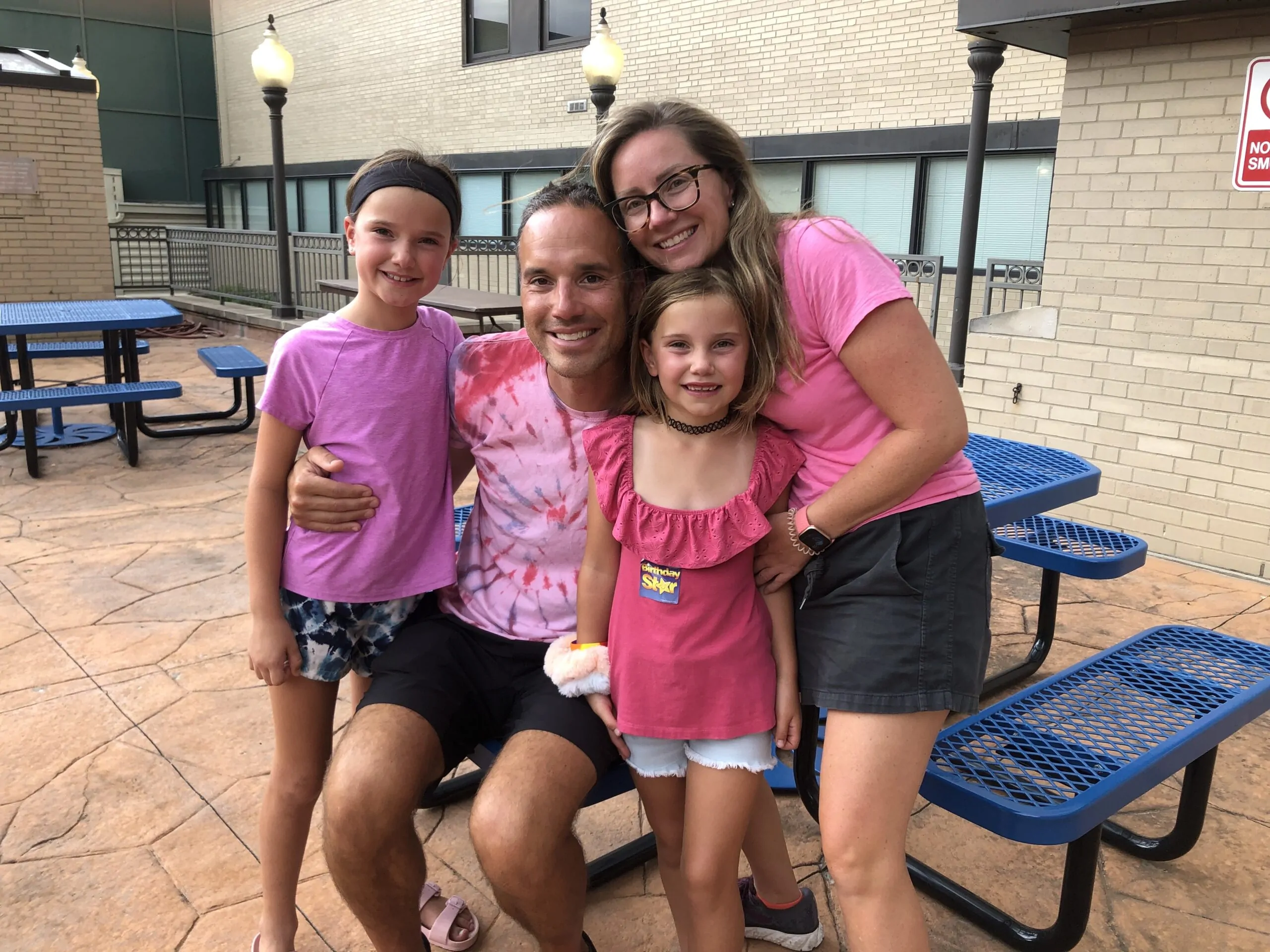
When Craig and Emily later sat both girls down to tell them he had cancer, their older daughter Allison, who was eight at the time, looked at her father and said something he has carried ever since.
“Everybody has a superhero inside of them,” she told him. “It’s time for yours to go to work.”
Craig proceeded with standard treatment: six weeks of concurrent radiation and temozolomide chemotherapy, followed by twelve cycles of adjuvant temozolomide. He also began wearing the Optune device, which delivers tumor treating fields (TTFields) directly to the brain[3].
Craig wore the device for just over two years, well beyond the point many patients reach. Post-radiation scans showed minimal change in the residual tumor. That remaining disease is still there today, monitored every three to four months.
No clear finish line
For patients living with GBM, uncertainty never ends. It becomes part of the condition itself. Craig’s residual disease cannot be surgically removed without risking function, and treatment options remain limited while the disease is stable and has not recurred.
“You don’t want to have a recurrence,” Craig says, “but until you do, there’s really nothing else you can do. It’s this weird waiting game of hoping nothing happens.”
Standard MRI remains central to monitoring, but it has limitations. It cannot always distinguish active tumor growth from the effects of treatment, a challenge known as pseudoprogression.
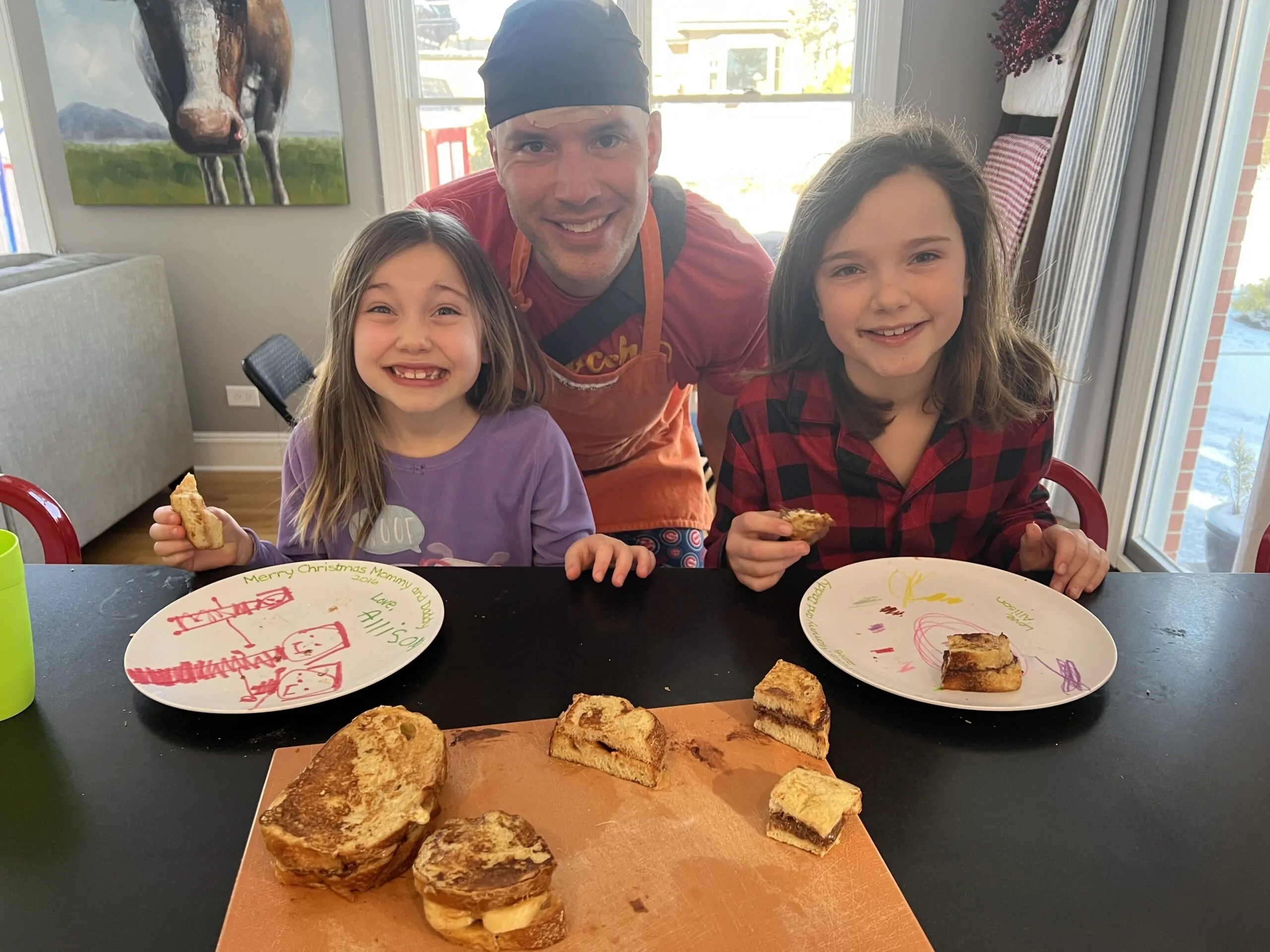
The effects of Craig’s disease and treatment are still present in daily life. Since surgery, his short-term memory has been affected. He may forget conversations from the night before, and his daughters know to put things on the calendar. His balance has worsened to the point that he holds someone’s hand on uneven ground. Tingling in his left hand and foot after surgery was eventually identified as focal seizures, and he now sees an epileptologist on a regimen that has stabilized the episodes.
‘Scanxiety’, the dread that can build before a scan, has eased with time. Craig now goes in the morning, has breakfast, meets Emily at the doctor’s office and receives his results within a couple of hours. On most days, he says, he is not thinking about cancer at all.
Why better tools matter
Craig’s experience reflects one of the central challenges in glioblastoma care. Even after surgery, radiation and chemotherapy, patients and clinicians often face difficult questions about what is happening in the brain and what can be done next.
For newly diagnosed GBM, the core treatment pathway of maximal safe resection followed by radiation and temozolomide chemotherapy has changed relatively little since it was established as standard care in 2005[4].
To tackle this area of critical unmet need, Telix is developing therapeutic and diagnostic programs for glioblastoma through a ‘theranostic’ approach. On the diagnostic side, this includes PET imaging with 18F-FET, a radiolabelled amino acid designed to support more precise tumor characterization. On the therapeutic side, Telix is advancing targeted radiopharmaceutical therapy with the goal of delivering treatment directly to tumor cells while limiting impact on surrounding healthy tissue.
Together, these programs reflect Telix’s focus on developing better tools for patients like Craig, and for the clinicians caring for them across the full course of the disease.
“No matter what happens”
Craig and Emily have been married for nearly eighteen years. Through the long months of treatment and the ongoing uncertainty of living with residual GBM, Emily has been by his side.
“No matter what happens, we’ll get through this together and we’ll figure it out,” she always tells him. “Those are the things that keeps me going,” Craig says.
His daughters, now ten and twelve, have adapted to the rhythms of his condition with a matter-of-factness he finds both remarkable and reassuring. They ask about MRI results the way other families might ask about a routine check-up.
Craig has found his own sense of purpose in giving back. He participates in Head for the Cure events and patient advocacy discussions, helping others find their footing after a GBM diagnosis. A therapist once told Craig that helping others through something similar can become its own form of healing. He has found that to be true.
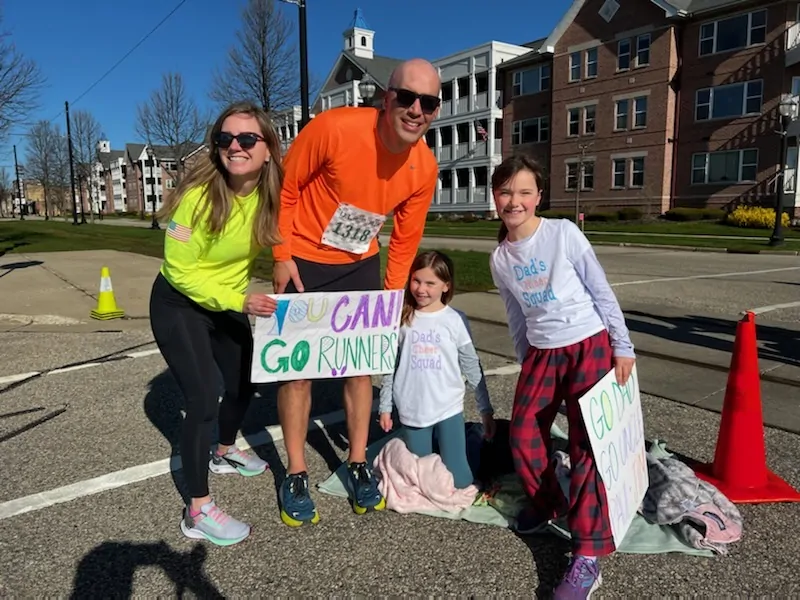
“Feeling like maybe something I’m doing will help somebody else along the way,” Craig says. “That means a lot.”
Craig’s story is shared with permission.
Resources
To learn more about Head for the Cure, including upcoming 5K events, patient and caregiver resources, and ways to support the community, visit headforthecure.org.
U.S. healthcare professionals can explore diagnostic challenges in glioma at gliomagrayareas.com. To learn more about Telix’s brain cancer portfolio and current clinical trials, visit clinicaltrials.telixpharma.com.
This article is for educational and disease-awareness purposes and does not constitute medical advice or product promotion.
[1] Stupp R, et al. Radiotherapy plus concomitant and adjuvant temozolomide for glioblastoma. N Engl J Med. 2005;352(10):987–996.
[2] Ostrom QT, et al. CBTRUS Statistical Report: Primary brain and other central nervous system tumors diagnosed in the United States in 2016–2020. Neuro Oncol. 2023;25(Suppl 2):iv1–iv99.
[3] Stupp R, et al. Effect of tumor-treating fields plus maintenance temozolomide vs maintenance temozolomide alone on survival in patients with glioblastoma. JAMA. 2017;318(23):2306–2316.
[4] Kotecha R, et al. Key Clinical Principles in the Management of Glioblastoma. JCO Oncol Pract. 2023;19(4):180–189.