
Fighting for Every Day
During Brain Tumor Awareness Month, Telix is sharing the stories of patients and caregivers living with brain cancer to highlight the ongoing need for better diagnosis and treatment.
Courtney Watson is the Director of Programs and Communications at Head for the Cure, a nonprofit organization dedicated to raising awareness and funding for the brain tumor community. Her mother, Sandra was diagnosed with glioblastoma (GBM) in 2016 and passed away the same year — less than nine months after diagnosis. We spoke to Courtney about her family’s journey, the challenges of navigating a GBM diagnosis, and the work she does every day to make sure no one faces this disease alone.
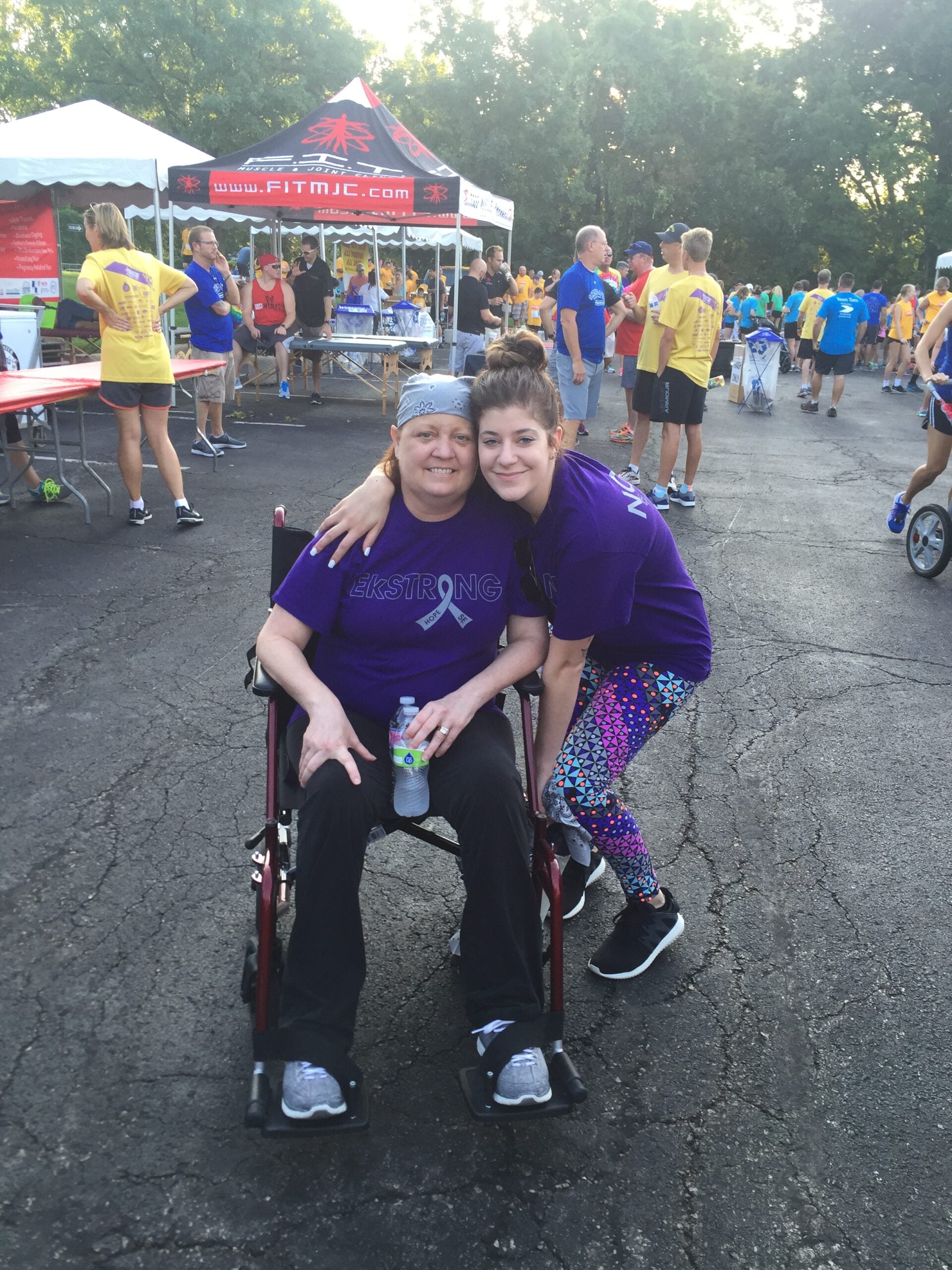
Sandra Ekstrom was the kind of woman who was never late, so when her boss called Courtney’s stepfather to mention that Sandra had been coming in late, repeatedly, and out of nowhere, it stopped the family cold. Their family physician ordered an MRI, and the following week, after a headache sent Sandra to the emergency room, the results came back. There was a mass on her brain.
“The worst part was seeing my mom sitting in the hospital bed, not knowing why she was there,” Courtney recalls. “From being this bubbly, outgoing, talkative woman, to being quiet. Her personality was completely different.” Sandra was 49, about to turn 50. She was diagnosed with glioblastoma — the most aggressive and most common malignant brain tumor in adults, with a median survival of around fifteen months from diagnosis.1
She just didn’t know what was happening
Surgeons were able to remove around 50 per cent of the tumor, and Sandra spent her 50th birthday in hospital. When she came home, Courtney moved back in to help with her care alongside her stepfather and brother.
Tumor tissue was sent to the Mayo Clinic for pathology, and the family waited weeks for a formal result while the disease continued to progress. “Mentally, we prepared ourselves,” Courtney says. “The anticipatory grief set in pretty quickly.”
Looking back, Courtney finds some comfort in knowing her mother was largely unaware of how serious things were due to the cognitive issues from the large tumor. “She really didn’t know what was going on the whole time,” she says. “And I think that was for the best. She did still have some of her personality and her humor, though.”
By late October 2016, the disease was progressing too fast, and Sandra was placed in hospice care just before Thanksgiving. She passed on December 10th, 2016 — not even nine months after her diagnosis.
Every millimeter matters
The uncertainty around a GBM diagnosis can be relentless. For Courtney’s family, it meant waiting four weeks for pathology results while her mother was still in hospital and the disease was visibly progressing. It meant trying to understand what each new scan was showing. And it meant making treatment decisions without the clarity they so desperately needed.
“Just the unknown is very, very exhausting to families,” Courtney says. “When your doctor doesn’t know due to delayed results, it makes you stress out even more.”
She describes sitting with her family in front of MRI images alongside the neurosurgeon and neuro-oncologist, asking question after question about what each part of the brain does and what each region of the tumor means for her mother’s function. “You can’t take out the brain,” she says. “Every millimeter matters. Wherever the tumor is, it impacts something — speech, the way they walk, their memory. It changes your loved one drastically.”
MRI remains the primary tool for monitoring brain tumors, but it cannot always distinguish between active tumor growth and the effects of treatment — a challenge known as pseudoprogression — and it has limited ability to characterize tumor biology or detect residual disease where the blood–brain barrier remains intact.2 “With the brain, there’s never a remission,” Courtney says. “Having something that can give you a little bit more peace of mind between scans would be so much better for patients and their families.”
There has been comparatively little therapeutic progress in GBM over the past three decades, and fewer than ten per cent of patients survive beyond five years from diagnosis.3 “There hasn’t been a lot done in the past 30 years,” Courtney says. “And that’s very different compared to other cancers. The more funding we can get for treatments, imaging, and trials, that’s going to be a game-changer.”
At Telix, we are focused on progressing our LAT1-targeted neurooncology portfolio, a PET imaging agent and a therapeutic, both of which are designed to cross the blood–brain barrier, enabling them to reach tumor tissue. For imaging specifically, this means our PET agent can detect tumor activity even where the blood–brain barrier remains intact, directly addressing a key limitation of MRI. Clinical studies have demonstrated that PET imaging with 18F-FET can exceed 90 per cent accuracy in distinguishing tumor activity from post-treatment change.4
No one should fight this alone
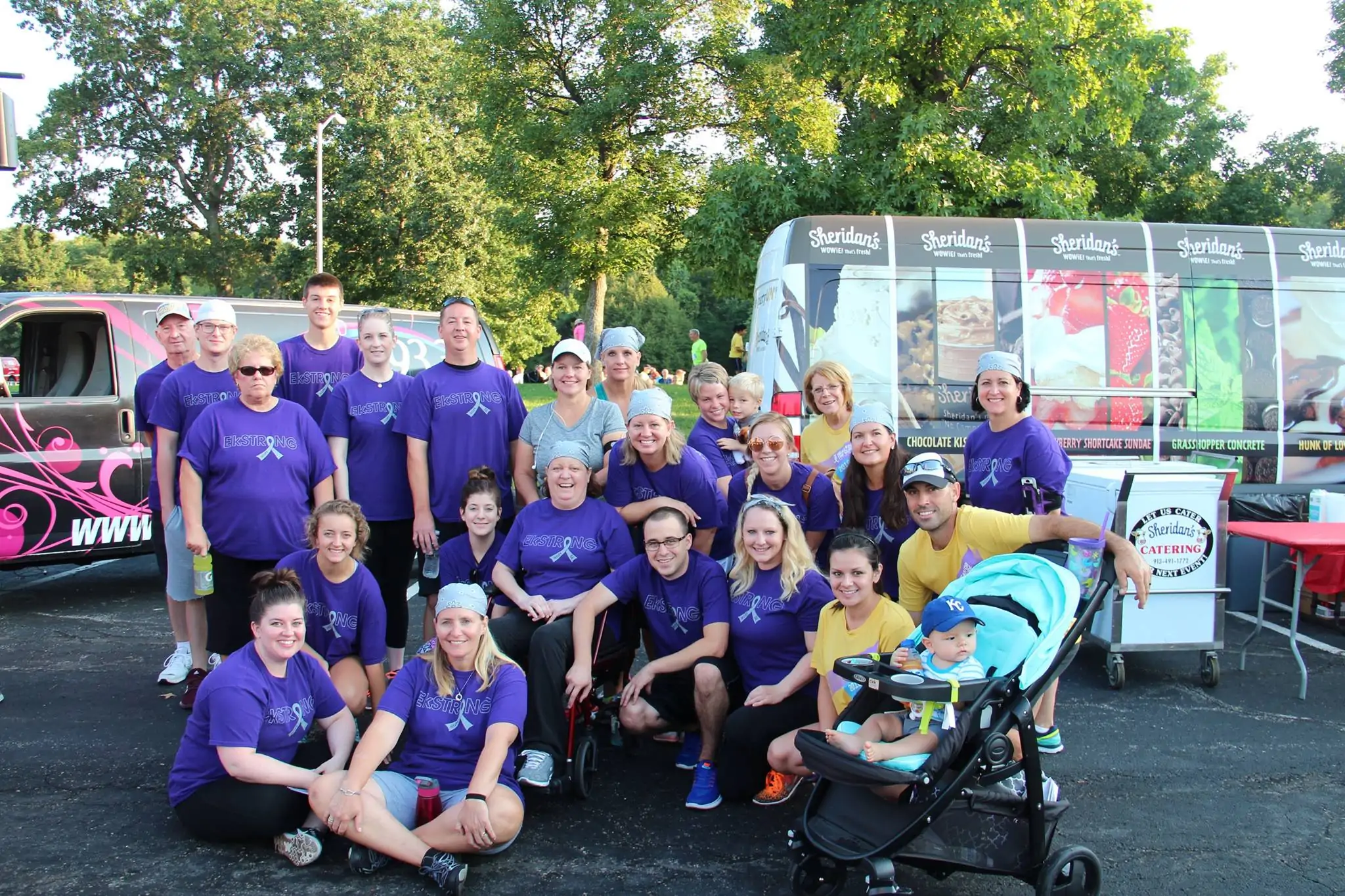
In 2018, about a year and a half after Sandra passed, Courtney joined Head for the Cure — a nonprofit organization founded in 2003 and based in Kansas City that has become one of the United States’ most active brain cancer patient advocacy and fundraising organizations. “I wanted to give back and learn more,” she says. “Being able to help people going through something that I’ve gone through — and give them resources I didn’t have — is very impactful.”
Head for the Cure’s work is built around three pillars: building awareness for a disease that is not yet widely understood by the public; raising funds through events that directly support research and clinical programs; and igniting hope for patients and caregivers navigating a brain tumor diagnosis. Their flagship fundraisers are a series of 5K run/walks held in cities across the country — from Seattle to Orlando — where each event partners with a local hospital or cancer center, directing a portion of proceeds to their specific clinical trials, research programs, and patient initiatives. Each year, Head for the Cure grants over one million dollars to national partners and local beneficiaries.
But the organization’s work goes well beyond fundraising. For patients and caregivers who arrive at a GBM diagnosis with little warning and no roadmap — much like Courtney’s family in 2016 — Head for the Cure offers a range of direct support. Their Path to Hope platform is an online tool designed to help patients and caregivers understand, manage, and cope with a brain tumor diagnosis. Their Legacy of Hope support group provides community specifically for caregivers who have lost a loved one. A dedicated Nurse Navigator service, offered through the Brain Cancer Support and Solutions Alliance, provides one-on-one support to help families identify and access the best available treatments and trials. The Path to Relief Fund offers direct financial grants to families managing the practical burdens of a diagnosis.
“If we can just help them out at any point and let them know they’re not alone,” Courtney says, “we’ve reached our goal.”
Courtney’s story is shared with permission.
To learn more about Head for the Cure — including upcoming 5K events, patient and caregiver resources, and how to support the community — visit headforthecure.org.
U.S. healthcare professionals can explore diagnostic challenges in glioma at gliomagrayareas.com. To learn more about Telix’s brain cancer portfolio and current clinical trials, visit clinicaltrials.telixpharma.com.
References
- Stupp R, et al. Radiotherapy plus concomitant and adjuvant temozolomide for glioblastoma. N Engl J Med. 2005;352(10):987–996. ↩︎
- Galldiks N, et al. Contribution of PET imaging to radiotherapy planning and monitoring in glioma patients. Neuro Oncol. 2021;23(6):881–893. ↩︎
- Ostrom QT, et al. CBTRUS Statistical Report: Primary Brain and Other Central Nervous System Tumors Diagnosed in the United States in 2016–2020. Neuro Oncol. 2023;25(Suppl 2):iv1–iv99. ↩︎
- Singnurkar A, et al. 18F-FET-PET imaging in high-grade gliomas and brain metastases: a systematic review and meta-analysis. J Neurooncol. 2023;161(1):1–12. ↩︎
This article is for educational and disease-awareness purposes and does not constitute medical advice or product promotion.